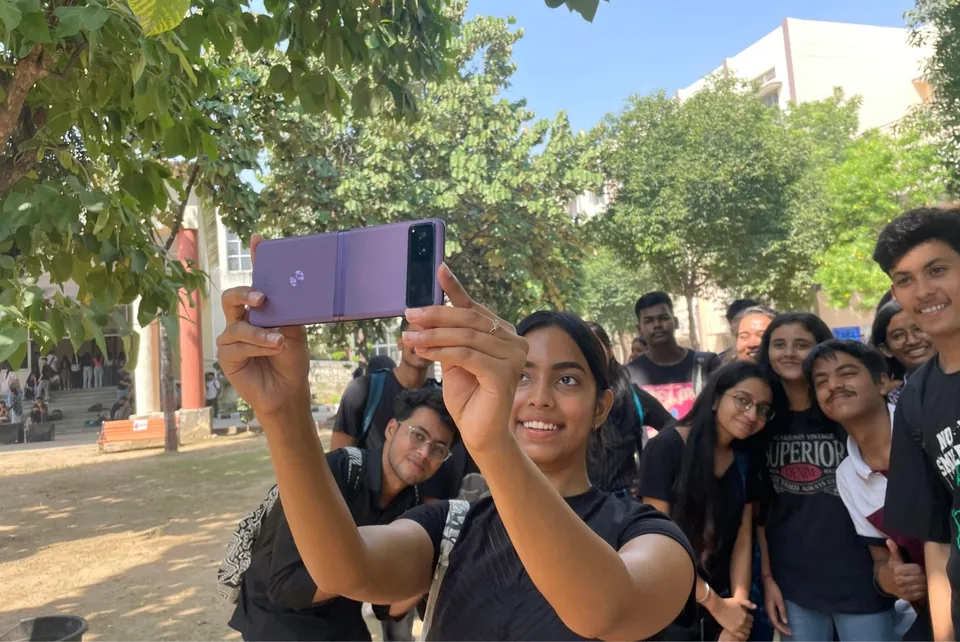
There are roughly 43 million students in Indian higher education, spread across 10K+ colleges in 200+ cities, and almost all of them arrive in July and leave in May. Marketing to college students in India is therefore not a niche; it is the single largest concentration of first-time buyers in the country, on a timetable that is published a year in advance. Most brands still treat it as a stall at a fest.
This is the playbook we use for Gen Z marketing on campus, built on 100K+ campus ambassadors and 250+ campaigns. It covers the calendar, the people, the formats, the content and the numbers, in that order, because that is the order in which brands get them wrong.
Start with the academic calendar
The campus year has four seasons and only two of them are useful. July and August are orientation: freshers arrive, hostels fill, every WhatsApp group is being formed and nobody has a favourite anything yet. September to November is fest season part one, with cultural and technical fests, sports meets and society recruitment. December is exams and nothing works. January to March is fest season part two, bigger and better funded. April and May are exams again, then summer empties the campus.
Put your launch in orientation week or at the start of a fest run. A budget that clears in the second week of December lands in an empty corridor. If you can only afford one sprint a year, make it August to October.
Build the ambassador layer before anything else
A student ambassador is not a brand fan in a t-shirt. The ones that work are paid for outcomes, report into a city lead, and are given a reason to be the person in the hostel who knows about the brand. One per college is the minimum; one per hostel block is where the programme starts to produce results.
Recruit through societies rather than open calls. The E-cell, the dramatics society, the gaming club and the placement committee already have the reach, the group chats and the social credibility. A campus marketing programme that borrows those networks starts with 300-person WhatsApp groups on day one instead of building them from zero.
Pay on time and in public. Ambassadors talk to each other across colleges, and a programme that delays a small payout for six weeks loses its best people to the next brand by October. Weekly or fortnightly payouts, a leaderboard the city lead actually updates, and a visible path from ambassador to paid campus creator are what keep the layer alive past the first fest.
Marketing to college students in India: the formats that produce an action
Every campus format should end in something a student does with their thumb. Here is the short list, in the order we usually layer them.
- Orientation kits and fresher-week sampling, when habits are still unformed.
- Society sponsorships that come with a slot in the society’s own content and group chats.
- Fest activations with the product in hand and a code to redeem, shot as content for Instagram.
- Hostel and canteen sampling and activations tied to a quick-commerce reorder link.
- Student pricing and referral codes that ambassadors can post without embarrassment.
- Campus creator content: students filming the brand in their own rooms, labs and canteens.
The thing all six have in common is that the brand is useful or entertaining at a moment the student already cares about. A hoarding at the gate is neither, and a stall that hands out a pamphlet is a hoarding with staff.
Turn the campus into a content studio
The cheapest reels in India are shot by students, in hostels, on phones. A fest activation that is not filmed is half an activation. Brief ambassadors and campus creators to capture the day, give them a simple angle, and secure usage rights so the best clips can run as paid ads afterwards. One good semester on campus can supply the creative for the whole year. Keep the brief loose: a hook, a product moment and a call to action, and let the student decide the rest, because a reel that looks like a brand made it will be scrolled past in the same hostel it was shot in.
This is also the fastest route into the creator economy. Many of the 50K+ creators in our network started as campus ambassadors who turned out to be good on camera. We wrote about the mechanics in the campus-to-creator pipeline.
Keep them after the fest ends
The banner comes down on Sunday night. The group chat does not. The brands that get a second purchase are the ones that give the group something worth forwarding every couple of weeks: a code that works for everyone, a deal that is better in bulk, a reel that is funny enough to share. That is community marketing, and it is the difference between a campaign and a presence.
Edtech brands understand this better than most, because their product is literally the semester. A test-prep app in Pune that shows up at orientation, sponsors the quiz society, runs a referral code through ambassadors and keeps the group chat alive until the exam is doing every layer of this playbook at once.
Students do not remember the stall. They remember who was still useful in week nine.
Measure the semester, not the stall
Footfall is not a metric. Measure what the programme made happen: codes redeemed per ambassador, signups per college, cost per retained user by city, and how many clips from the activation became ads. Track it weekly, on one dashboard, so that the campus money, the creator money and the paid money are judged against the same number.
Then compare colleges against each other. The same brief will produce very different results in a residential engineering campus, a city commerce college and a private university with a big fest budget, and the spread tells you where to double down next semester.
If you would rather not build the ambassador network, the society relationships and the fest calendar yourself, that is what a Gen Z marketing agency is for. Either way, start in August, start with the ambassadors, and do not leave campus when the fest does.
FAQ
When is the best time to market to college students in India?
Orientation in July and August, then the fest seasons of September to November and January to March; avoid December and April to May, which are exams; see our campus marketing service.
How do campus ambassador programmes work?
One or more students per college, recruited through societies, paid for outcomes such as signups and referrals, and reporting into a city lead who tracks codes weekly.
What should a campus campaign measure?
Codes redeemed per ambassador, signups per college, cost per retained user by city and how many activation clips became ads, as covered in how we measure Gen Z campaigns.